Ring before 4pm on any day of the week and the nest is normally treated the same day, usually two to four hours after the call. The phone is answered 7am to 9pm, seven days, including Saturdays, Sundays and the August bank holiday. Ring after the last job has gone out and we say so rather than promise an evening slot — you get the first appointment next morning and advice for overnight. Either way it is £60 fixed, with no call-out fee and no weekend surcharge.
What we commit to
- Phone answered — 7am to 9pm, seven days. A person, not a voicemail box.
- Same-day cut-off — 4pm.
- Typical arrival — two to four hours from the call, and we ring ahead before setting off.
- Saturdays and Sundays — normal working days, normal price.
- August bank holiday — working Monday 31 August 2026.
- After the cut-off — first slot next morning, plus what to do in the meantime.
- Price — £60 fixed for a wasp or hornet nest, £70 for a bumblebee nest.
- Not a 24-hour service — and we explain why below rather than claiming one.
What "same day" actually means
Every wasp company in Manchester puts same day on the front page, so the phrase has stopped carrying information. Two numbers make it checkable: when we stop adding jobs to today's round, and how long you wait once you are on it.
The cut-off is 4pm
Treating a nest takes minutes; getting to it takes the afternoon. The day is one route, planned first thing and adjusted as calls come in. Once the last slot has gone, squeezing in another job means arriving somewhere at dusk with a ladder. Ring at ten to four and you are on today. Ring at half past and you are first thing tomorrow. The phone stays on well past the cut-off because plenty of people can only ring after work.
The arrival window
Usually two to four hours from the call. Where we cannot hit that you get told on the phone, with a time, before you agree to anything — a window that is kept is worth more than a cheerful sometime today.
Why we don't advertise a 24-hour service
Nobody treats a wasp nest at three in the morning. It is no safer and no more effective — working at height in the dark, with a torch beam that pulls defending wasps towards your face, is worse for everyone. If a company advertises 24 hours, the useful question is not whether the phone rings at 3am but what time a van will be at your door.
Saturdays, Sundays and the August bank holiday
All three are normal working days — same hours, same £60, no surcharge. Colonies do not observe the working week, and a nest that was tolerable on Thursday can be unusable by Sunday lunchtime. The bank holiday weekend ending Monday 31 August 2026 falls in the busiest fortnight of the wasp year across Manchester and Greater Manchester. If you already know you have a nest, ring on the Friday.
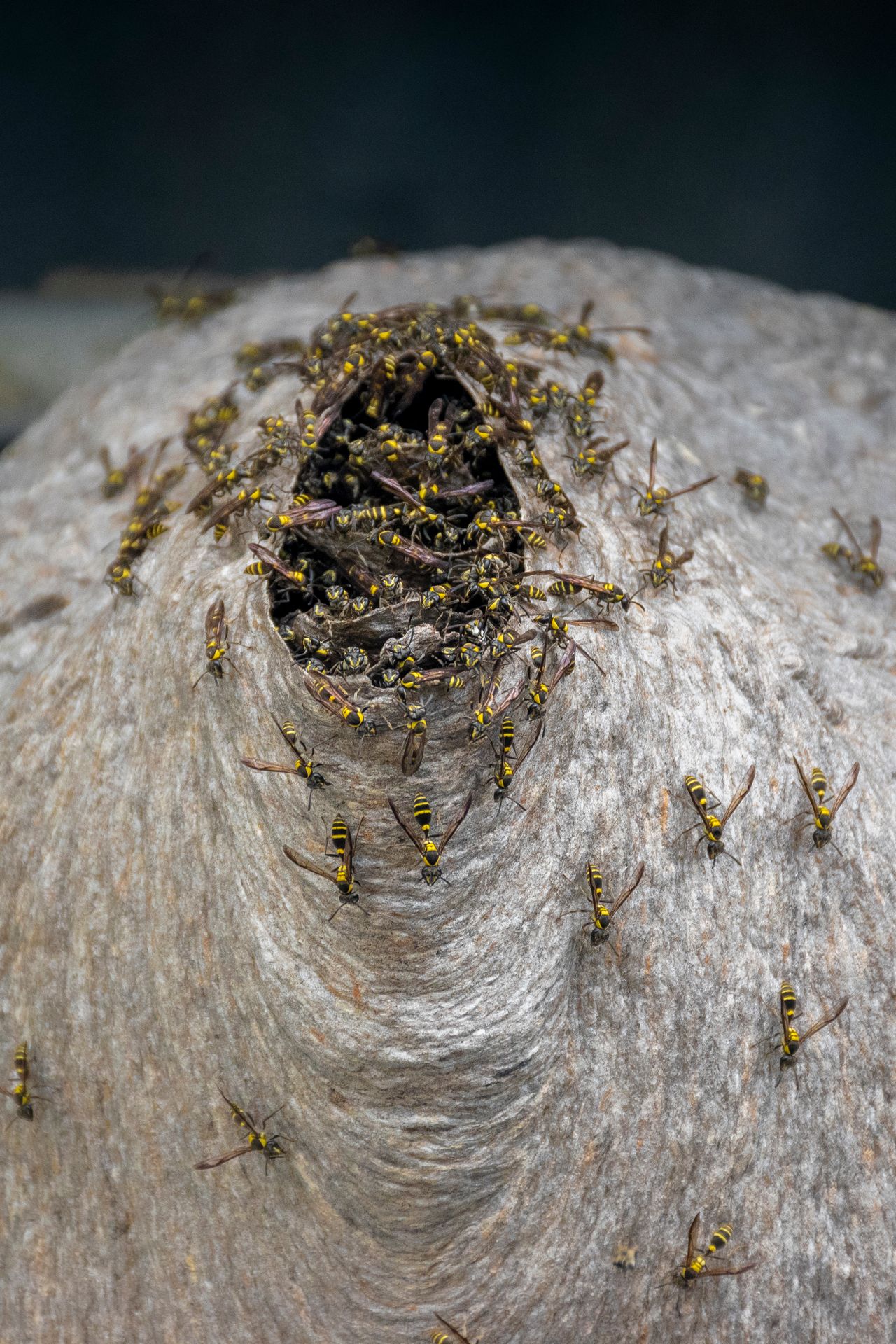
What happens if you ring at nine at night
You get a person and an honest answer: today has gone. We take the address and where the nest is, put you in the first slot next morning, and talk you through the hours in between. What you will not get is a booking taken at nine with a vague promise to try tonight, followed by nobody arriving. The overnight wait is the least dangerous part anyway — wasps return to the nest and go quiet after dark, and a colony that has been intolerable all afternoon is usually still by ten.
Which postcodes we can reach today
Where you sit on the map changes the odds of a same-day slot, because it is one route and the driving is the expensive part of the day.
- Central and inner south — M1 to M4, M13 to M16, M19 to M21. Almost always same day before the cut-off.
- North and east — M8, M9, M11, M12, M18, M40. Usually same day, occasionally first thing next morning.
- Southern edge — M22 and M23. Same day on a morning call; a late afternoon one out here is more often tomorrow.
- Outside those postcodes — we say so on the phone rather than take a booking we cannot keep.
What counts as a genuine emergency
The word gets used loosely. These are the ones worth moving other jobs for, and worth saying out loud when you ring:
- A nest over a doorway. Everyone using the door crosses the flight line.
- A nest on a child's route to the garden. Children run, and running past an entrance reads as a threat.
- Someone in the household with a known sting reaction. Say this first. It changes where you sit in the day.
- Wasps getting through into a room. Via a ceiling rose, a downlighter or a gap in plasterboard — the nest is inside the fabric of the building and the route is already open.
- A ground nest where work has to happen. A lawn that needs mowing, under decking, a border someone tends. Vibration sets these off without warning.
When you don't need us
A fair number of calls end with us telling someone not to book. That is a better outcome than a wasted £60.
- A nest at the far end of a garden you can walk around. Wasps defend the nest, not the garden. If nobody goes within a few metres, leaving it to collapse naturally in autumn is sound.
- A few wasps at the bin or the table. Workers forage a couple of hundred metres from home, so wasps in the garden are not evidence of a nest on your property.
- An old nest in the loft. Dry, papery, silent. Nests are single-use and never reoccupied. Bag it and bin it yourself.
- A bumblebee nest. Large, furry, slow, only a handful coming and going. Bumblebee colonies are small and die back naturally by late summer, so leaving it alone is nearly always the right answer, and we will tell you that on the phone.
- A honeybee swarm. A dense cluster of thousands hanging on a branch or fence post. We do not treat honeybees; a local beekeeper may collect a honeybee swarm, and that is the call worth making.
- A late October nest nobody goes near. The colony is days from collapse. Waiting costs nothing.
What to do in the hours before we arrive
- Close the windows on that elevation. Whichever side of the house the nest is on, shut the windows there. Open the far side if you need the air.
- Keep the room shut. If wasps are appearing inside, close that door and lay a rolled towel along the gap at the bottom.
- Stay out of the flight line. Wasps travel in and out along a fairly straight path. Give it a few metres and do not stand underneath watching.
- Bring pets and children in. Move the washing line, the paddling pool and the bins if they take anyone past the nest.
- Do not spray the entrance. A shop-bought aerosol rarely reaches the colony. It soaks a few workers and brings the rest out defending. People are seriously hurt doing this every UK summer.
- Do not block or seal the entrance. Wasps sealed in chew sideways through plasterboard and come out inside the house. Sealing is a job for after treatment.
- Do not knock it down, burn it or flood it. Setting fire to a nest in a roof void is how a wasp problem becomes a house fire.
If someone in the house reacts badly to stings
Do not wait for us, and do not take medical guidance from a pest control website. If someone who has been stung is struggling to breathe, feels faint, or has swelling of the face, lips or tongue, that is a 999 call. Where there is a known allergy and an adrenaline auto-injector in the house, get it out and make sure everyone knows where it is. The NHS pages on insect bites and stings and anaphylaxis are the right source, and NHS 111 covers anything you are unsure about. Tell us about the allergy when you ring — it moves you up the day.
Need it dealt with today?
£60 fixed fee, same-day across Manchester and Greater Manchester when you ring before 4pm. No form to fill in and no callback queue.
Call to Book07770 015197 — answered 7am to 9pm, seven days.
Frequently Asked Questions
Yes, if you ring before 4pm. Calls taken before the cut-off go onto the same day's round, and the usual wait from the call to the van arriving is two to four hours. After 4pm we book you for first thing the next morning rather than promise an evening slot we would not keep.
4pm. The phone is still answered until 9pm, but a job booked after the cut-off would mean arriving at dusk, which is neither safe nor effective. Ring later than that and you get the first appointment the following morning, plus advice for overnight.
Yes. Saturdays and Sundays run as normal working days, on the same hours and the same £60 fixed price. There is no weekend surcharge and no call-out fee. Weekends in August book up faster than weekdays, so ring early in the day if you can.
Yes. We work the August bank holiday Monday, Monday 31 August 2026, on normal hours at the normal price. It falls in the busiest fortnight of the wasp year, so the round tends to fill by mid-morning.
No. A wasp or hornet nest is £60 fixed and a bumblebee nest is £70 fixed, whatever the day and whatever time the call comes in. Nothing is added for urgency, for height, or for a nest that turns out to be awkward to reach.
Someone answers, and tells you straight that today has gone. We take the address, book you into the first slot the next morning, and talk you through what to do overnight. Wasps are far less active after dark, so the hours you spend waiting are the safest part of the delay.
Sometimes. A nest above a door, on the route children take to the garden, or one putting wasps into a room is worth treating urgently, and so is any nest at a property where someone has a known sting reaction. A nest at the far end of a garden you can walk around is not an emergency, and we will say so.
We do not work at height in the dark. Torchlight draws defending wasps towards the beam and towards your face, and working off a ladder at night adds risk without making the treatment any better. Nests are treated in daylight, which is why the booking cut-off exists.